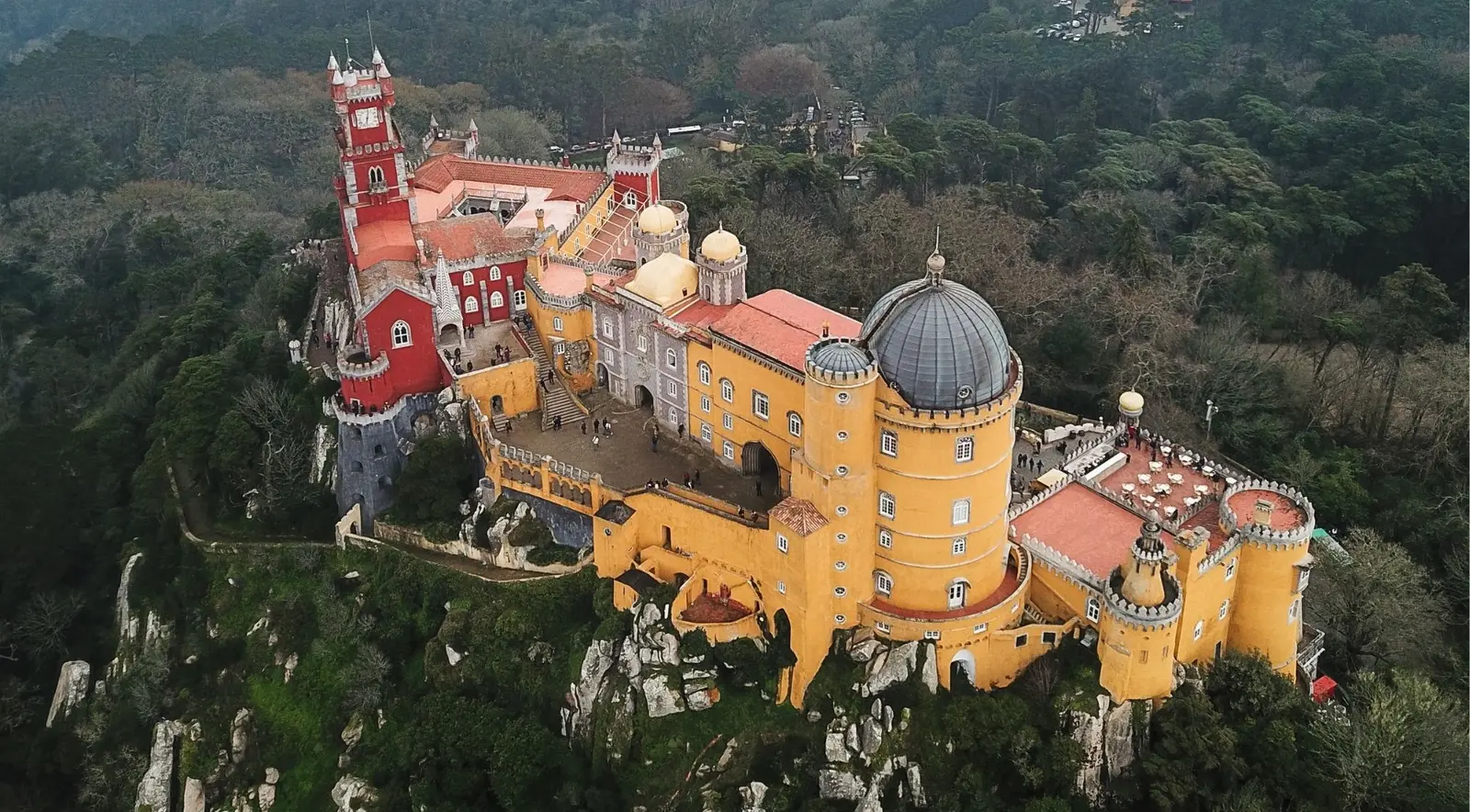
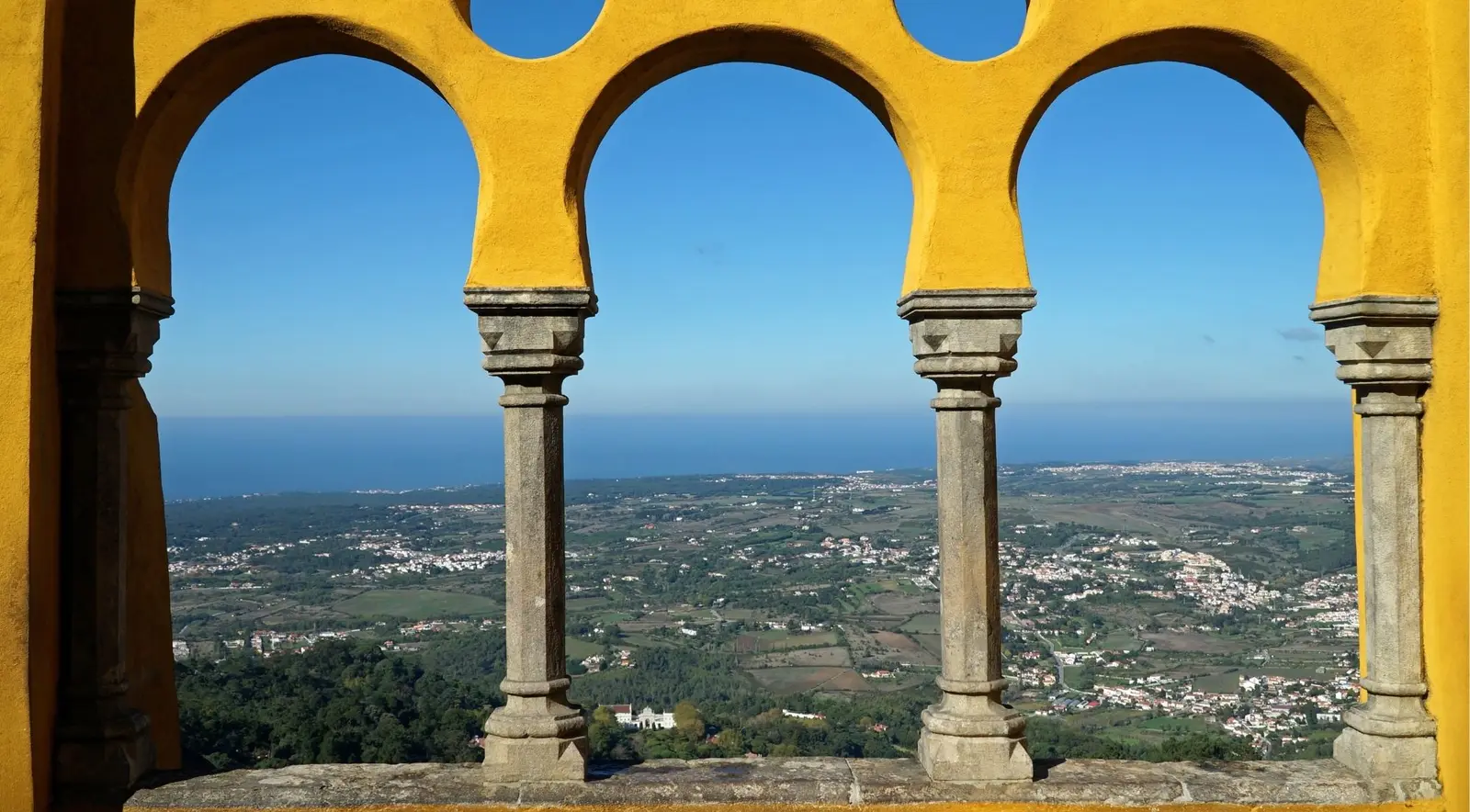
The palaces do not change, but almost everything around them does. Sintra's gardens were planted in the nineteenth century by collectors who wanted the hills to look like somewhere else, and the result is a place with a flowering calendar as distinct as its skyline. Parques de Sintra's camellia collection in the Park of Pena runs to 3,858 adult plants and is recognised by the International Camellia Society as a Garden of Excellence; the annual camellia exhibition opens on 28 February 2026, which is roughly when the collection peaks. The Himalayan rhododendrons in Monserrate's Japanese garden follow in March and April.
Then the rain stops. Lisbon takes 14.1 mm in an average June and 2.6 mm in July, and by August the hillsides that were green in March have browned off. They stay that way until the autumn rain arrives, usually in October, and the cycle starts again. Anyone choosing between a spring trip and a late-summer one is choosing between two genuinely different-looking landscapes, even though the buildings in the photographs are identical.
Winter: December to February
The quietest stretch of the year, and a wet one. December and January each take over 100 mm of rain in Lisbon and about ten days on which some falls, and there is less than ten hours of daylight. What you get in exchange is real: Quinta da Regaleira's Initiation Well without a queue on the spiral stair, and Pena's terraces with room to stand. The camellias begin from late in the season. A wet winter day also changes the balance of the itinerary, because the palace interiors and Regaleira's tunnels are the parts that do not care about the weather.
Spring: March to May
The hills are green, the gardens are at their best, and the daylight climbs from under twelve hours to over fourteen. Rain is still a real factor — May averages 57.8 mm across the month — but the days are long enough that a wet morning does not end the trip. Visitor numbers climb steadily through the season, and by May the region is running at 115 on the visitor index, level with September and October.
Early summer: June
June is the month where most of it comes together. Rain drops to 14.1 mm, daylight reaches 14 hours 52 minutes at mid-month, Lisbon afternoons average 26.1 °C rather than August's 28.8 °C, and the region sits at 108 on the visitor index against 127 in August. It is also outside Portugal's critical period for rural fires, which starts on 1 July. The gardens are past their flowering peak by then, which is the cost.
High summer: July and August
The driest and warmest months, and August is the busiest of the year. Lisbon records 8.5 days at 30 °C or above in July and 10.2 in August, and that heat lands on the climb from the Pena park gate and on the Moorish Castle's ramparts rather than in the palace rooms. The Atlantic stops are the relief: Cabo da Roca averages 21.9 °C in August, nearly seven degrees below the city. These are also the two months when a government fire alert can close the hilltop monuments at a day's notice.
Autumn: September to November
September is often described as Sintra's quiet shoulder month, and the regional figures do not really support it: at 116 on the visitor index it is level with May and October, and only July and August are busier. What September does have is warmth without July's heat and only 38.6 mm of rain. October is the turn: still busy, still mild, and the wettest month of the autumn at 110.6 mm. By November the rain is at its annual peak of 133.9 mm and regional demand has fallen to 88, the first clear drop after the summer.
Rain is a total for the whole month, not a daily rate, and it says nothing about how many days were wet — the next column does that. The visitor index sets an average month at 100. Sources and their limits are in How we know this.